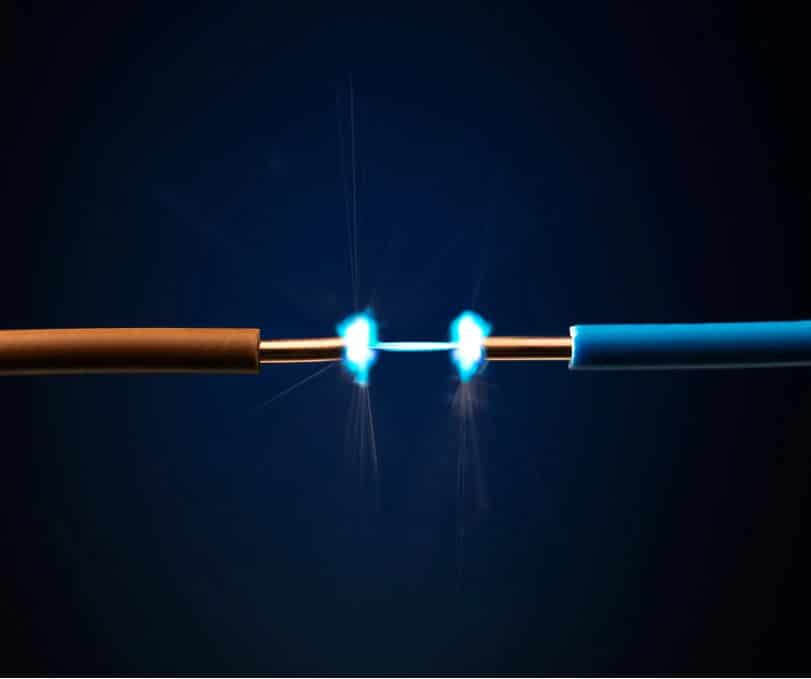
Thermal energy generation is the process of converting heat flow into electrical energy. This works thanks to the Seebeck effect – a phenomenon in which an electrical field is created when two metal conductors with each having a different temperature are joined. The resulting temperature gradients can be used to “harvest” electricity. Only a temperature of 5-10 Kelvin is needed to generate electrical energy in the milliwatt range.
Principle of TEG modules
A TEG module consists of an array of P and N-type semiconductor materials. The module will have on the top and bottom a substrate to either absorb temperature (concentrator) and on the other side radiate (heatsink) the temperature. By selecting different sizes of concentrators and heatsinks for absorption and radiation, the heat flow can be influenced and a trade-off can be made on size and needed energy.
Available products
TEG modules are available in different sizes and are often flat and square with a typical power density of 10mW/cm2. The modules are offered for different market segments, e.g., Matrix Industries has a product family of modules useable for IoT wearables and also TEGs for industrial applications.
Combination of energy harvesters
A very logical combination of energy harvesters is a TEG and a PV cell. A thermal gradient and a light source might coexist, for example, a machine operating in a factory. As both harvester technologies can be flat, when they are combined in a module the effective power density of the TEG is increased with the PV from the indoor lighting.
Image: Getty Image