Where Can IoT Contribute To What Is Important?

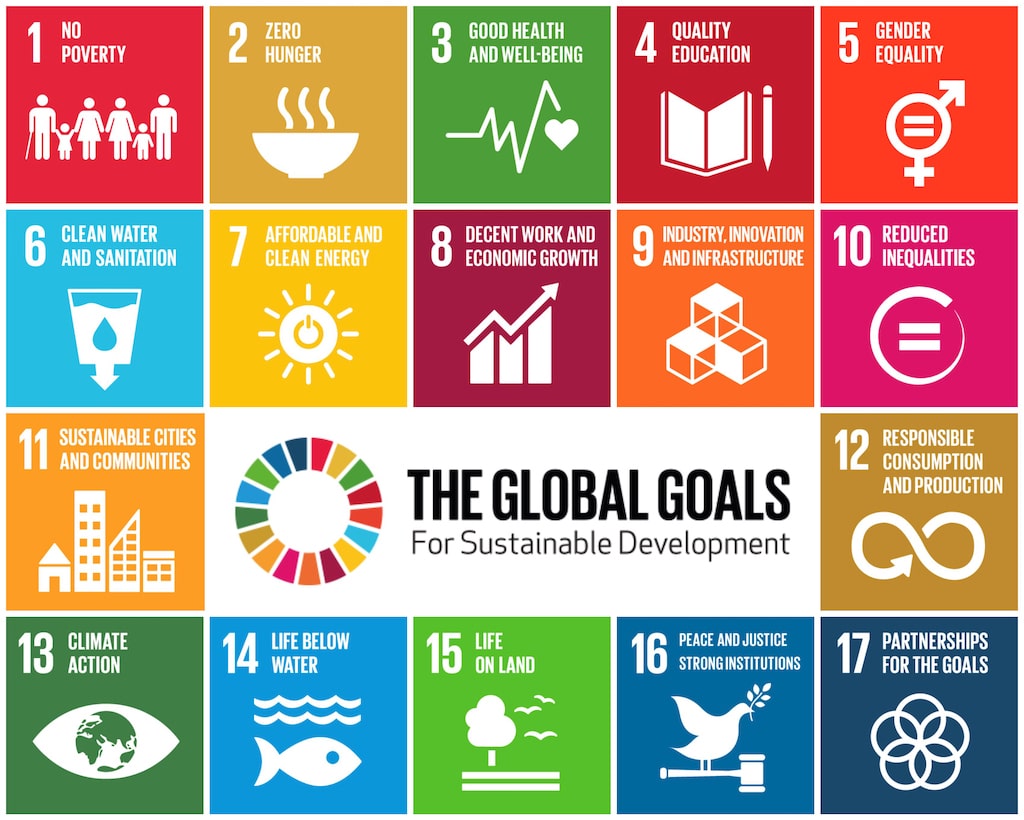
The image shows a visual representation of the global goals for sustainable development

In 2017, participants in the Geneva IoT Week developed an international declaration on the Internet of Things for Sustainable Development. The United Nations (UN) has determined 17 Sustainable Development Goals (SDG) which helps the world to guide with what is important. The University of Cambridge has simplified the UN model and grouped particular SDG’s into a six-ambition mode.

According to experts, the IoT is needed in e.g.:

  • to combat climate change;
  • to conserve biodiversity and eco-monitoring;
  • to tackle hunger, water and food security.

What technologies are already in use?

1) The most common are environmental monitoring and forecasting sensors. They measure temperature, humidity, and concentration of chemical pollutants in the air, water, and soil, as well as check for noise, radioactive pollution and more.

2) Smart collection and recycling of municipal waste. Using the IoT, it is possible to monitor the fullness of waste bins and call an operator to clean them in good time.

3) The IoT in agriculture helps ensure the environmental safety of products and improve their quality. Farmers do this by tilling the land, selecting fertilisers for the plants, etc., based on regularly updated detailed data on soil quality.

4) The smart home/city/plant helps to conserve nature by reducing energy consumption. This part is most attractive to businesses and ordinary city dwellers alike.
Das könnte Sie auch interessieren

4k-mems-infrared-emitter

Tiny IR: Opportunities & Technical Challenges Behind

Generating infrared light isn’t difficult. But generating it on a chip — reliably, efficiently, and compactly — is a different story. Traditional IR sources rely on heating elements. They radiate across a wide range of wavelengths, consume significant power, and require filters to isolate the signals. Manageable in labs, unworkable in wearables.

Mehr lesen
infrared emitter

Infrared: The Future Is Built on Light You Can’t See

Innovation tends to follow a familiar path: first, we invent something powerful. Then we shrink it. Only then does it become an everyday part of the infrastructure. But one layer is still missing in today’s technology: sensing beyond the visible. 

Mehr lesen
scheme showing the comparison of development cycle of traditional tech and deep tech startups

Comparing Development Cycles: Deep Tech vs. Traditional Tech

The journey from concept to market looks very different in traditional tech compared to deep tech. While traditional tech benefits from streamlined processes and quicker iteration, deep tech ventures face longer, more complex cycles due to the groundbreaking nature of their innovations.

Mehr lesen